
Why UAE Enterprises Are Ditching WordPress for Headless CMS in 2026
Key Takeaways
- UAE enterprises running WordPress at scale are hitting a wall with bilingual EN/AR delivery, plugin security debt, and multi-channel publishing that headless CMS UAE architectures solve natively.
- Government-adjacent compliance requirements, including PDPL data handling and UAE PASS integration, expose gaps in monolithic WordPress setups that headless systems close by design.
- Traffic spikes during Ramadan, White Friday, Dubai Shopping Festival, and GITEX regularly break plugin-heavy WordPress builds; decoupled front ends absorb the load differently.
- A phased WordPress to headless CMS migration in Dubai typically runs AED 45,000 to AED 220,000+, depending on content volume, integrations, and whether the front end is rebuilt from scratch.
- Not every UAE business needs to migrate. Content-led marketing sites with low integration needs are often better served staying on WordPress with performance hardening.
- The switch is being led by finance, real estate, healthcare, and government-adjacent sectors, where compliance, speed, and multi-platform delivery carry direct commercial weight.
Search interest for “headless CMS UAE” and “WordPress alternative Dubai” has climbed steadily through 2026, and the pattern behind it is consistent. It is not hype-driven. UAE enterprises running content-heavy WordPress installs are hitting specific, repeatable failure points: bilingual site performance, plugin security exposure, and an inability to push the same content to a website, a mobile app, and a customer portal without duplicating work three times over.
This is not a WordPress-is-bad argument. WordPress still powers a large share of Dubai’s SME websites well, and for a lot of businesses it remains the right call. But for UAE enterprises operating at a certain scale, particularly those juggling EN/AR content, government integrations, or multiple digital touchpoints, the monolithic structure of WordPress has started working against them rather than for them.
What Headless CMS Actually Means (And Why WordPress Wasn’t Built for This)
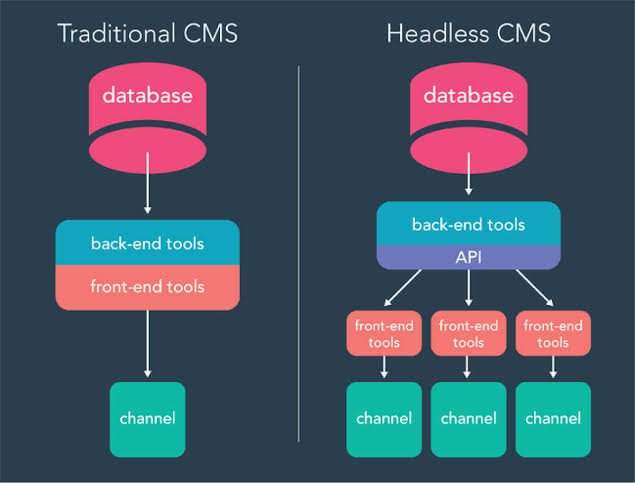
A traditional CMS like standard WordPress bundles two jobs into one system: it stores your content, and it renders that content into the pages visitors see. The editor and front end live in the same house. Change a theme file and the whole site feels it.
A headless CMS UAE setup splits those jobs apart. The CMS becomes a pure content repository, accessible through an API. The front end, whether that’s a website built in Next.js, a mobile app, a kiosk in a mall, or a WhatsApp Business integration, pulls content from that API on its own terms. Nothing about the delivery layer is tied to how the content was authored.
For a single-language brochure site, that separation adds complexity without much payoff. For a UAE enterprise publishing bilingual content across a website, an app, and a partner portal, it removes duplication that WordPress simply was not architected to handle.
The Real Reasons UAE Enterprises Are Ditching WordPress for Headless CMS
None of these reasons are theoretical. Each one shows up repeatedly in migration conversations with UAE mid-market and enterprise clients.
Government Compliance and Multi-Platform Delivery Pressure
PDPL, Federal Decree-Law No. 45 of 2021, tightened how personal data gets stored, processed, and transferred. WordPress installs built around a decade of accumulated plugins were rarely designed with that level of data governance in mind. Every third-party plugin is another vendor touching user data, another attack surface, another thing to audit.
UAE PASS integration compounds the issue. Government-adjacent portals in real estate (Ejari-linked platforms), healthcare (DHA-regulated providers), and financial services (DFSA and ADGM entities) increasingly need single sign-on through UAE PASS, plus clean API access for DubaiNow and sector-specific reporting. Bolting that onto a plugin-dependent WordPress stack usually means stacking more plugins on top of the ones already causing problems. A headless architecture handles this at the API layer instead, which is a cleaner, more auditable integration point.
Bilingual EN/AR and RTL Performance Failures
This is the one that surprises people least once they see it laid out. WordPress RTL support through themes and page builders is functional but rarely fast. Elementor and similar builders generate heavy CSS and JS payloads, and RTL rendering on top of that often means duplicated styling, inconsistent spacing, and load times that differ noticeably between the English and Arabic versions of the same page.
For a UAE audience where a meaningful share of users browse primarily in Arabic, that gap is not cosmetic. It is a direct hit to bounce rate and conversion on exactly the segment a bilingual strategy was supposed to serve. A headless setup with a purpose-built front end can treat EN and AR as equal citizens from the start, rather than RTL being an afterthought layered onto an English-first theme.
Security and Plugin Vulnerabilities at Enterprise Scale
WordPress’s plugin library is its biggest strength for small sites and its biggest liability for large ones. An enterprise WordPress install commonly runs 25 to 40+ active plugins once you count SEO, forms, caching, security, page building, and integrations. Every one of those is a maintenance dependency and a potential vulnerability. Patch cadence becomes a full-time concern rather than a monthly task.
Headless architectures shrink that surface. The CMS handles content. Integrations happen through defined, versioned APIs rather than through plugins with direct database access. It is not that headless is unhackable. It is that the attack surface is smaller and far easier to reason about, which matters for any business handling customer PDPL-regulated data.
Site Speed During Peak UAE Traffic Events
Ramadan traffic patterns shift dramatically, often concentrating around late evening hours. The Dubai Shopping Festival and White Friday drive e-commerce and campaign traffic spikes that can be 5 to 10 times normal volume. GITEX drives short, intense bursts tied to announcements and exhibitor activity.
Plugin-heavy WordPress sites tend to buckle under exactly this kind of spike, because caching plugins and shared hosting were never built to absorb sudden, non-linear load. A decoupled front end, served through a CDN and built on a modern framework, handles traffic spikes structurally differently. Static generation and edge caching absorb the burst before it ever reaches the CMS.
Headless CMS vs Traditional WordPress: What Actually Changes for UAE Teams
The shift is not purely technical. It changes how marketing, content, and dev teams work day to day.
Editors still get a content interface, usually one that looks and feels similar to what they are used to. What changes is what happens after they hit publish. Instead of a theme rendering that content directly, it goes out through an API to however many front ends are connected: the main site, a mobile app, a partner portal, and digital signage in a physical location.
Developers gain more control over performance and design, since the front end is no longer constrained by WordPress theme architecture. That flexibility comes with a real cost: headless setups require more upfront engineering than installing a WordPress theme and a page builder. This is why headless makes sense for enterprises with the content complexity and multi-channel needs to justify it and less sense for a single-location business that just needs a clean five-page site.
Marketing teams feel the shift too, in ways that are not always obvious upfront. Campaign launches that used to mean editing a page and waiting on a developer to fix a broken layout now mean structuring content once, in a defined schema, and trusting the front end to render it correctly everywhere. That structure takes discipline to set up. It pays off the second time a campaign needs to go out across the website, an app banner, and a WhatsApp Business catalogue simultaneously, since the content only has to be entered once rather than three separate times by three different people.
There is a governance upside too, one that often gets overlooked in the technical conversation. Because content lives in a defined schema rather than scattered across page builder widgets, it becomes far easier to audit what data is stored where, which matters directly for PDPL compliance reporting. A compliance officer asking where customer-facing content touches personal data has a much shorter answer to give when that content sits in a structured API rather than buried inside a decade of shortcodes and custom fields.
What a WordPress to Headless CMS Migration Actually Costs in the UAE
Pricing depends heavily on content volume, the number of front-end destinations, and how much custom integration work is involved. Based on current UAE market rates for this kind of project, phased migrations typically fall into three bands.
Discovery and content audit (AED 15,000 to AED 30,000): content inventory, taxonomy mapping, API architecture planning, and a technical audit of existing WordPress data structures that need to migrate cleanly.
CMS setup and content migration (AED 45,000 to AED 90,000): headless CMS configuration, content model build-out, migration scripts, and bilingual EN/AR content structuring with proper RTL data handling built in from the start.
Front-end rebuild and integrations (AED 80,000 to AED 220,000+): the new front end itself, plus UAE PASS; payment gateway (Telr, PayTabs, Tabby, Tamara); and any government or CRM integrations (Zoho, Salesforce, HubSpot) the business needs connected.
Full enterprise migrations with multiple front ends, government integrations, and a rebuilt design system land toward the top of that range. A single-site migration with straightforward content and no complex integrations can land closer to AED 90,000 to AED 140,000 all in.
Industries in the UAE Making the Move First
The pattern is not random. It clusters around sectors where compliance, speed, or multi-channel delivery carries direct commercial consequences.
Financial services and DIFC or ADGM-regulated entities are migrating fastest, driven by PDPL audit requirements and the need for tightly controlled API access rather than a sprawling plugin stack. Healthcare providers under DHA oversight follow closely, for similar data governance reasons plus the need to push the same content to patient portals and public-facing sites without duplication.
Real estate platforms integrating with Ejari and Mollak are moving to headless setups to handle high-volume listing data that needs to sync across a website, a mobile app, and third-party portals simultaneously. Retail and e-commerce brands are migrating specifically for peak-season resilience after watching WordPress installs slow to a crawl during White Friday or DSF traffic surges.
Signs Your WordPress Setup Is Working Against You
A few patterns show up consistently before a business decides to migrate.
Page load times on the Arabic version of the site run noticeably slower than the English version, and no amount of caching plugin tuning closes the gap. The plugin count has crept past 30, and nobody on the team can confidently say what half of them do or whether they are still needed. Publishing the same piece of content to the website and the mobile app requires manual duplication rather than a single source feeding both. Security patches have become a recurring fire drill instead of a scheduled task. And traffic spikes during Ramadan or DSF reliably cause slowdowns or outright downtime, year after year, despite hosting upgrades.
If two or more of these are true, a migration conversation is worth having. If none of them are, WordPress with proper performance hardening is very likely still the right tool.
Common Migration Mistakes to Avoid
Rushing the content model is the most frequent one. Teams that skip a proper taxonomy and content-type planning phase end up rebuilding their information architecture six months into the new system, which costs more than doing it right the first time.
Treating Arabic content as a translation task instead of a structural one is another. RTL layout, date formatting, and even how numerals render need to be designed into the front end from day one, not patched in after English is finished.
Underestimating integration complexity is common too. UAE PASS, local payment gateways, and CRM connections each carry their own authentication and data-handling requirements. Scoping these properly at the discovery stage prevents budget overruns during the build phase.
Running the migration as a single big-bang cutover instead of a phased rollout is the fourth. Enterprises that try to move everything, content, integrations, and front end, in one release tend to hit the most downtime and the most rollback pressure. A phased approach, migrating content and validating the API layer before the new front end fully replaces the old site, gives the team a working fallback at every stage instead of a single point of failure on launch day.
Is headless CMS more expensive than WordPress for a UAE business?
Upfront costs are higher because a custom front end has to be built rather than themed. For enterprises with multi-channel content needs, the long-term maintenance savings and performance gains generally offset that initial cost within 12 to 18 months.
Can WordPress itself be used as a headless CMS instead of switching platforms entirely?
Yes, through the WordPress REST API or WPGraphQL, WordPress can serve as a headless backend while a separate front end handles delivery. This is a middle-ground option worth considering for teams that want to keep their existing content and editor workflow.
How long does a typical WordPress to headless CMS migration take in the UAE?
Most phased migrations run 10 to 20 weeks depending on content volume, the number of integrations, and whether the front end is being designed from scratch or built against an existing design system.
Does headless CMS improve Google rankings for UAE businesses?
Not directly, but the performance gains, particularly faster load times and better Core Web Vitals scores, are ranking factors Google weighs. Sites that were previously slowed by plugin bloat often see measurable Core Web Vitals improvements post-migration.
Is headless CMS necessary for a small UAE business with a simple website?
Usually not. The complexity and cost are justified by multi-channel content needs, high traffic volumes, or compliance requirements. A five-page marketing site with no app or portal integration rarely needs it.
What happens to existing SEO rankings during a headless CMS migration?
Rankings can be preserved with a properly managed migration: URL structure mapping, 301 redirects, and structured data carried over correctly. Rankings typically dip briefly post-launch and recover within 4 to 8 weeks if the technical migration is handled cleanly.
Where This Leaves UAE Businesses Weighing the Switch
Headless CMS is not a universal upgrade. It solves specific, expensive problems: bilingual performance, plugin security debt, multi-channel content duplication, and compliance-driven API control. For UAE enterprises running into those exact walls, the migration pays for itself. For businesses that are not, the smarter move is often hardening the WordPress setup already in place rather than rebuilding around a problem that does not yet exist.
If your team is seeing two or more of the warning signs above, particularly around Arabic site performance or peak-season downtime, it is worth getting a proper technical audit before committing to either path. Martian’s CMS development team in Dubai can assess your current WordPress setup against a headless architecture and scope what a migration would actually involve, cost, and take, based on your specific content and integration needs. Related reading: our guide to custom software development in Dubai covers the broader build-vs-buy decision for enterprise systems, and our cybersecurity services page details how we handle PDPL-compliant data architecture for regulated UAE sectors.